Why Front Yard Design Matters More Than You Think
According to the National Association of Realtors, good landscaping can increase your home's value by 10-12%. On a $400,000 home, that's $40,000-$48,000 in added value. But beyond pure economics, your front yard sets the emotional tone for everyone who visits or passes by your home.
Most homeowners focus their design energy on backyards — the private retreat where they spend time relaxing and entertaining. But the front yard is what connects you to your neighborhood, welcomes guests, and creates daily satisfaction every time you pull into your driveway. A well-designed front yard can transform a mediocre house into a neighborhood standout.
The Five Elements of Strong Curb Appeal
1. The Approach: Walkways and Driveways
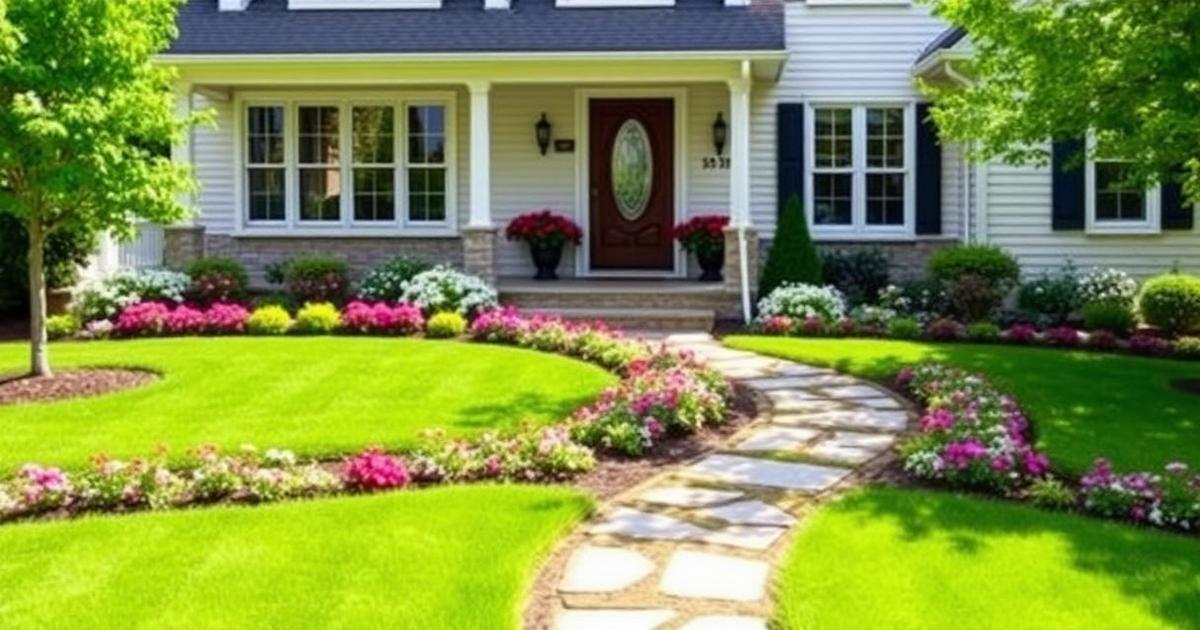
Your front walkway is the narrative arc of your curb appeal — it's the journey from public space to private home. A cracked concrete path sends one message; a graceful flagstone walkway bordered by lavender sends an entirely different one.
Walkway design principles:
- Main walkways should be at least 4 feet wide (5 feet is ideal for two people walking side by side)
- Gentle curves create visual interest and slow the approach, making the garden experience last longer
- Material should complement your house — brick for traditional homes, stone for craftsman, concrete pavers for modern
- Lighting along the walkway extends curb appeal into evening hours and improves safety
Your driveway is the largest hardscape element in most front yards. If it's in poor condition, no amount of planting will overcome its negative impact. Consider resurfacing options: stamped concrete, pavers, or bordered concrete with planting strips.
2. Foundation Planting
Foundation planting is the landscaping directly around your house's base. It serves practical purposes — hiding the foundation, providing insulation, managing water drainage — and aesthetic ones. The classic mistake is planting a row of identical shrubs (the "green meatball" approach) that adds nothing to your home's character.
Modern foundation planting principles:
- Layer heights: Tall plants (small trees/large shrubs) at corners, medium shrubs between windows, low plantings under windows
- Vary texture: Mix broad-leafed evergreens with fine-textured grasses and flowering perennials
- Create rhythm: Repeat plant groupings in a pattern rather than using all different species
- Leave breathing room: Plants grow! Space them according to mature size, not nursery pot size
- Frame, don't hide: Planting should enhance your home's architecture, not obscure it
3. Entry Framing
Your front door is the focal point of your entire front yard composition. Everything should draw the eye toward it. Entry framing techniques include:
Flanking containers: Large matching pots on either side of the front door create instant impact. Choose containers proportional to your door — they should be at least one-third the door's height. Plant them with seasonal displays or architectural evergreens for year-round presence.
Overhead structure: A pergola, arbor, or portico over your entry adds architectural gravitas and creates a transition zone between exterior and interior. Even a simple garden arch with climbing plants transforms a plain door into a destination.
Color accent: Your front door color should contrast with or complement your house color. A bold door (red, navy, chartreuse) on a neutral house creates a powerful focal point that anchors the entire landscape composition.
4. Lawn Shape and Condition
If you have a front lawn, its shape and condition matter enormously. A rectangular patch of struggling grass looks worse than no lawn at all. Consider these approaches:
Defined edges: Clean, crisp edges between lawn and planting beds make everything look more intentional and maintained. Use a half-moon edger or install permanent edging (steel, stone, or brick).
Organic shapes: Instead of a rectangle, give your lawn a gentle organic shape with sweeping curves. This creates more visual interest and allows for larger planting beds at the edges.
Alternative ground covers: In small front yards, consider replacing lawn entirely with a combination of ground covers, gravel, and plantings. This can look more sophisticated and require far less maintenance than a tiny lawn that's hard to mow.
5. Lighting and Accessories
Landscape lighting extends your curb appeal from a daytime-only proposition to a 24-hour impression. Key lighting strategies:
- Uplighting: Place ground-level fixtures to light up tree canopies and architectural features from below
- Path lighting: Low bollards or stake lights along walkways for safety and ambiance
- Accent lighting: Highlight specific features — a specimen tree, water feature, or sculptural element
- House numbers: Illuminated or well-lit house numbers serve function and add modern polish
Front Yard Design Styles
Traditional/Colonial
Symmetrical layout with balanced plantings flanking a central walkway. Boxwood hedges, flowering dogwoods, hydrangeas, and classic perennial borders. Brick or bluestone walkways. White picket fence optional but characteristically appropriate. This style works best with Colonial, Georgian, Federal, and Cape Cod architecture.
Modern/Contemporary
Clean lines, architectural plants, minimal but impactful planting. Ornamental grasses, agaves, sculptural succulents, and specimen trees. Concrete, corten steel, and decomposed granite hardscaping. This style complements mid-century modern, contemporary, and minimalist architecture.
Cottage/English
Romantic, overflowing borders along winding paths. Roses, lavender, foxgloves, and self-seeding annuals. Stone or brick paths with plants spilling over edges. Picket fence or low stone wall. Works with cottages, bungalows, and Victorian-era homes.
Mediterranean/Drought-Tolerant
Warm materials (terracotta, natural stone), gravel gardens, olive trees, lavender, and rosemary. Minimal lawn or no lawn. Tile accents and courtyard elements. Perfect for Spanish Colonial, Tuscan, and Southwestern architecture — and any homeowner wanting to reduce water use.
How AI Transforms Front Yard Design
Front yard design has traditionally been challenging for homeowners because:
- It's hard to visualize — You see your front yard every day, making it difficult to imagine it differently
- Mistakes are public — Unlike a backyard experiment gone wrong, a front yard mistake is visible to everyone
- Professional design is expensive — Landscape architects typically charge $2,000-$5,000 for a front yard design plan
- Plant selection is complex — Choosing plants that work together, grow to appropriate sizes, and maintain interest across seasons requires deep knowledge
AI design tools address all four challenges. You upload a photo of your house, select a style direction, and within seconds see realistic visualizations of how your front yard could look. You can test multiple approaches — modern minimalist, traditional cottage, Mediterranean — without commitment.
Step-by-Step: Using AI for Front Yard Design
- Take a good photo: Stand across the street for a full-frontage shot. Include the entire house facade, current landscaping, walkway, and driveway. Shoot on an overcast day for even lighting
- Upload and select style: Choose the design direction that resonates with your home's architecture and your personal taste
- Review the AI concept: Look at the generated design holistically — does it enhance your home's character? Does it feel welcoming?
- Iterate: Try different styles, adjust elements you like and don't like, and generate multiple options
- Create your plan: Use the best AI concept as a detailed brief for a landscaper or as your personal DIY roadmap
Budget-Smart Curb Appeal Improvements
Not every curb appeal improvement requires a full landscape renovation. These high-impact, lower-cost changes can transform your front yard:
Under $100: Paint your front door a bold color, add matching house numbers, install solar path lights, plant seasonal annuals in containers by the entry.
$100-$500: Edge all garden beds crisply, add a layer of fresh mulch to all beds, replace a few tired foundation shrubs, install landscape lighting along the walkway.
$500-$2,000: Replace the front walkway, add an entry arbor or pergola, install a low garden wall or fence, create new planting beds with a designed plant palette.
$2,000-$5,000: Complete foundation planting redesign, new walkway and entry hardscaping, specimen tree planting, automatic irrigation system for the front yard.
The #1 Curb Appeal Tip
Before spending anything on new plants or hardscape, start by cleaning up what you have. Power-wash walkways and driveway, edge all beds, pull weeds, prune overgrown shrubs, and add fresh mulch. This alone can transform your front yard for under $200 and a weekend of work.
Common Front Yard Design Mistakes
Planting too close to the house: Foundation plants placed 6 inches from the wall will grow into the siding within years. Space shrubs at least half their mature width from the house.
Ignoring scale: A 60-foot oak in front of a single-story ranch house will overwhelm it within 15 years. Choose trees proportional to your home's scale.
Forgetting about winter: A front yard that looks amazing in June but barren in January needs more evergreen structure. Aim for at least 30% evergreen content in your plantings.
Blocking windows: Plants in front of windows should stay below the sill line at maturity. This seems obvious, but it's the most common foundation planting error.
Transform Your Front Yard Today
Upload a photo of your home and see how AI-designed landscaping can boost your curb appeal. Compare styles, test plant combinations, and get a visual roadmap for your front yard transformation.
Try AI Front Yard Design Free →