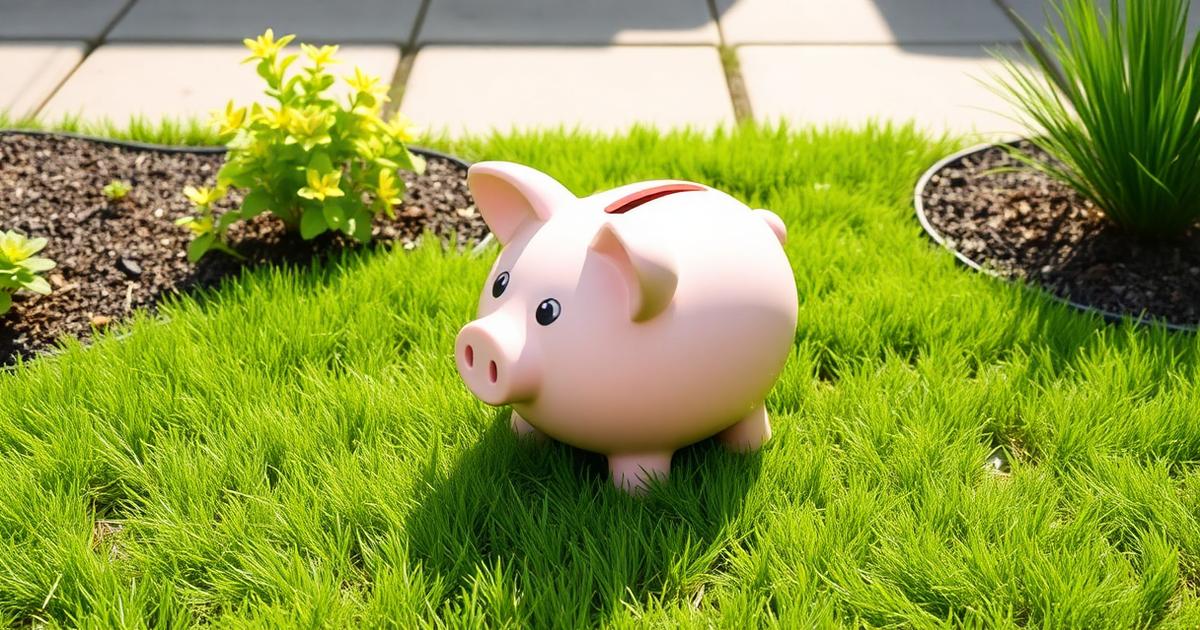
The Real Cost of Landscape Design
Let's be honest about what landscape design traditionally costs. A licensed landscape architect charges $2,000–$8,000 for a comprehensive design package. Even a basic consultation with concept sketches runs $500–$1,500. And that's before a single plant goes in the ground — installation typically costs 2–5x the design fee.
For a typical suburban front yard renovation, you're looking at $8,000–$25,000 all-in with professional design and installation. For a complete backyard transformation, $15,000–$50,000+ is common. These numbers put professional landscape design out of reach for many homeowners.
AI changes the first — and most expensive — part of this equation. The design and visualization phase that traditionally costs thousands is now essentially free. You can explore dozens of concepts, refine your vision, and arrive at a clear plan before spending anything on materials or labor.
How AI Saves You Money at Every Stage
Stage 1: Design ($0 Instead of $2,000+)
Upload photos of your yard and generate unlimited design concepts. Try modern, traditional, Mediterranean, cottage, minimalist — every style you can imagine. This exploration phase would cost $200–$500 per concept from a professional designer. With AI, it costs nothing and takes minutes instead of weeks.
Stage 2: Material Planning (Avoid Costly Mistakes)
The biggest budget killer in landscaping isn't the plants or materials — it's buying the wrong things. Homeowners who shop without a clear design often purchase plants that don't fit their space, materials in wrong quantities, or items that don't work together stylistically. AI-generated designs give you a clear visual target, dramatically reducing waste and returns.
Stage 3: Contractor Communication (Save on Revisions)
If you hire help for installation, showing contractors an AI-generated visual is worth its weight in gold. Clear visual communication means fewer misunderstandings, fewer change orders, and more accurate initial quotes. Contractors report that clients with visual references require 40% fewer revisions during installation.
Budget-Friendly Design Strategies
Strategy 1: The 80/20 Rule
Spend 80% of your budget on 20% of your space — the areas with the highest visual impact. For front yards, this is usually the entryway and the view from the street. For backyards, it's the area visible from your back door and main living spaces. Design the focal areas beautifully and keep the rest simple.
Strategy 2: Hardscape Investment
Good hardscape (pathways, patios, walls) is more impactful per dollar than plantings. A well-designed stone pathway transforms a yard more than $1,000 worth of randomly placed plants. Prioritize one or two hardscape features and build plantings around them.
Strategy 3: Start with Structure Plants
Invest in a few high-quality structural plants — trees and large shrubs that create the "bones" of your landscape. These are the elements that define your space and take years to mature. You can always add perennials, ground covers, and annuals later as budget allows.
Strategy 4: Propagation and Division
Once you have established plants, multiply them for free through division, cuttings, or seed saving. A $15 ornamental grass can be divided into 5–8 plants after two years. Perennials like hostas, daylilies, and sedums divide easily. Shrubs like hydrangeas and forsythia root from cuttings.
Budget Breakdown by Project Size
Micro Budget: Under $500
Focus on one high-impact change:
- New mulch and edge cleanup for all beds ($150–$250)
- One specimen plant at the front door ($50–$100)
- Refresh container plantings ($100–$200)
- Paint or stain existing planters and fence ($50–$100)
Use AI to visualize which single change would have the most impact on your specific yard, then execute only that.
Moderate Budget: $500–$2,000
Enough for a meaningful transformation of one area:
- New pathway or stepping stones to the front door ($300–$600)
- Foundation planting refresh with 8–12 shrubs and perennials ($400–$800)
- Small patio area with gravel and border plants ($500–$1,000)
- Privacy screening with fast-growing hedge ($200–$500)
Standard Budget: $2,000–$5,000
A complete front yard or partial backyard renovation:
- New walkway with professional-quality pavers or flagstone ($800–$1,500)
- Complete replanting of foundation beds ($600–$1,200)
- Small paver patio (150 sq ft) with seating area ($1,000–$2,000)
- Landscape lighting (solar or low-voltage) ($200–$500)
- Decorative elements: planters, boulders, edging ($200–$500)
Where to Save (and Where Not To)
Worth Saving On
- Annual flowers — Grow from seed ($3/packet) instead of buying flats ($20–$30 each)
- Mulch — Municipal composting programs often offer free or cheap mulch
- Edging — Clean-cut natural edges cost nothing vs. $1–3/ft for commercial edging
- Container plantings — Repurpose containers from thrift stores and paint them
- Ground cover — Buy one flat and propagate, rather than buying enough for full coverage
Worth Investing In
- Trees — A good tree adds $1,000–$10,000 to property value. Buy the largest you can afford.
- Soil amendment — Good soil is the foundation of everything. Don't skip this.
- Irrigation — A basic drip system ($100–$300 DIY) saves water and keeps plants alive
- Paver base material — Proper base preparation prevents sinking and shifting
- Quality tools — A good shovel and pruner last decades and make every project easier
Free and Low-Cost Resources
Free Plants
- Plant swaps — Local garden clubs often organize plant swaps in spring
- Neighborhood sharing — Ask neighbors if they have plants to divide
- Community gardens — Members often share excess plants and seeds
- Master Gardener programs — Free plant clinics and sometimes plant giveaways
- Facebook Marketplace and Buy Nothing groups — People regularly give away plants from garden renovations
Free Design Resources
- Extension service guides — Your state's cooperative extension offers free plant selection guides for your climate
- Native plant databases — Search by zip code for plants adapted to your specific conditions
- YouTube tutorials — Thousands of free landscape installation tutorials
- AI landscape design tools — Generate professional concepts at no cost
DIY vs. Hiring: When to Save and When to Spend
| Task | DIY Difficulty | Savings | Recommendation |
|---|---|---|---|
| Planting | Easy | 60–80% | Always DIY |
| Mulching | Easy | 70–80% | Always DIY |
| Simple pathways | Moderate | 50–70% | DIY if patient |
| Paver patios | Hard | 50–60% | DIY or hire |
| Retaining walls (>2ft) | Hard | 40–50% | Hire for safety |
| Grading/drainage | Hard | 40–50% | Hire — mistakes are expensive |
| Irrigation | Moderate | 60–70% | DIY for drip systems |
| Tree removal | Dangerous | N/A | Always hire |
Start Designing for Free
Upload a photo of your yard and explore AI-generated design concepts at no cost. See what's possible before spending a dime — then plan your budget based on a clear vision.