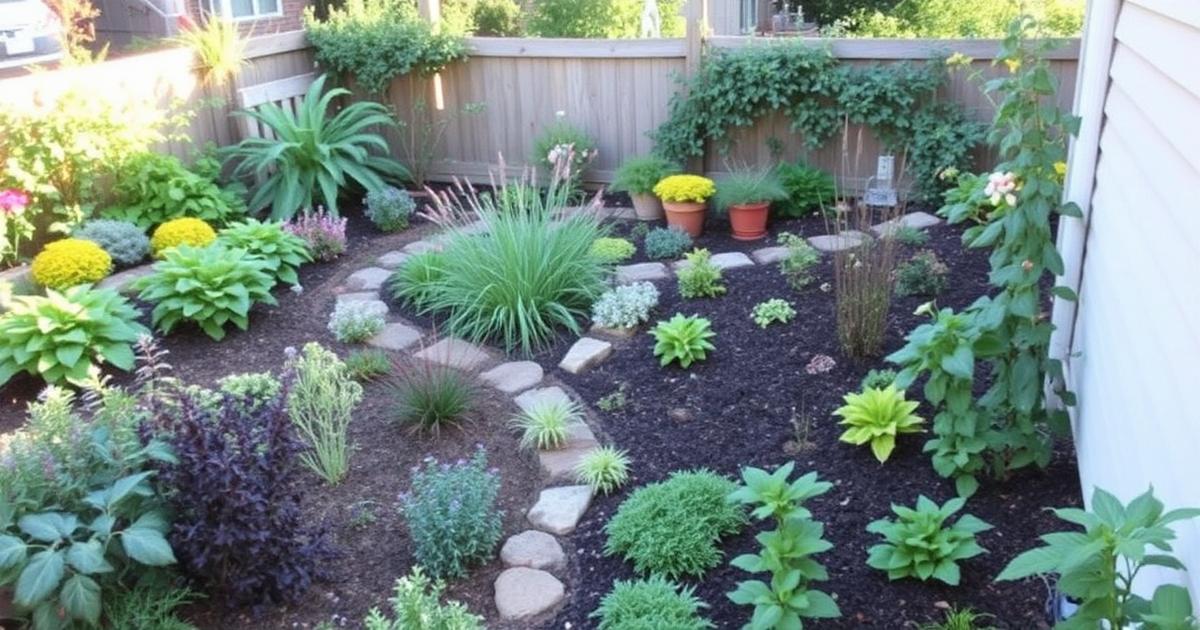
The Cost of Landscape Mistakes
Landscape design mistakes are uniquely painful because they're expensive to fix and visible every day. A poorly placed tree can't be easily moved once it's established. A patio built in the wrong spot becomes a constant reminder of poor planning. And plants installed in wrong conditions die slowly, wasting both money and time.
The average homeowner spends $3,000–$15,000 on landscape projects. When mistakes happen — and they're common — correction costs typically add 30–50% to the original budget. Some mistakes, like choosing invasive species or ignoring drainage, can cost tens of thousands to remediate years later.
AI landscape design tools address many of these mistakes at the cheapest possible point: before you start. By visualizing your design first, you can spot problems, test alternatives, and make informed decisions — all before breaking ground.
Mistake #1: No Master Plan
The Problem
The most common mistake is approaching landscaping piecemeal — buying plants on impulse, adding features reactively, and never considering how elements work together. The result is a disjointed yard that feels like a collection of disconnected projects rather than a cohesive outdoor space.
The Fix
Create a master plan before making any purchases. This doesn't need to be a professional blueprint — it's a visual overview of your complete vision, including all zones, pathways, plantings, and hardscape. AI tools make this easy: generate an overall concept for your entire yard, then use it as your guiding reference for every future decision.
Mistake #2: Ignoring Scale and Proportion
The Problem
Homeowners frequently plant trees that grow far larger than expected, install patios too small for their intended use, or choose plants that overwhelm their space. That cute 3-foot Norway Spruce from the garden center becomes a 50-foot monster in 15 years. The 8x10 patio that seemed fine on paper barely fits a table and four chairs.
The Fix
Research the mature size of every plant before purchasing. Use the "10-year rule" — imagine the plant at its 10-year size and make sure it still fits your space. For hardscape, physically mark out proposed areas with stakes and string, then live with them for a week before committing. AI visualization helps here — it tends to show spaces at a realistic scale, giving you an immediate sense of proportion.
Common Scale Mistakes
- Foundation plantings that grow above window height
- Trees planted too close to the house (should be at least 15–20 feet for large species)
- Walkways too narrow for two people side by side (minimum 4 feet for primary paths)
- Patios that can't accommodate furniture plus walking space (minimum 12x12 for a dining set)
- Fences that look great at 4 feet but would need to be 6 feet for actual privacy
Mistake #3: Wrong Plant, Wrong Place
The Problem
This is the single biggest plant-related mistake: installing plants in conditions where they can't thrive. Sun-loving plants in shade. Moisture-loving plants in dry soil. Tropical plants in cold climates. Acid-loving plants in alkaline soil.
The Fix
For every plant you consider, check these five compatibility factors:
- Light requirements — Full sun (6+ hours), part shade (3–6 hours), or full shade
- Hardiness zone — Will it survive your coldest winter temperatures?
- Soil type — Does it need sandy, loamy, or clay soil?
- Moisture needs — Drought-tolerant, average, or moisture-loving?
- pH preference — Acidic, neutral, or alkaline?
Mistake #4: Forgetting About Drainage
The Problem
Poor drainage is the silent landscape killer. Water pooling against foundations causes structural damage ($5,000–$20,000 to repair). Standing water in planting beds drowns roots and attracts mosquitoes. Poorly graded slopes send water onto neighboring properties, creating legal issues.
The Fix
Before any installation, understand your water flow:
- Walk your yard during and after a heavy rain to see where water flows and pools
- Ensure all grading slopes away from the house (minimum 6 inches of fall over 10 feet)
- Install French drains, channel drains, or rain gardens where water collects
- Use permeable materials (gravel, permeable pavers) where possible to reduce runoff
- Direct downspout water at least 6 feet from the foundation
Mistake #5: Neglecting Maintenance Reality
The Problem
Homeowners design for the garden they wish they had time to maintain, not the one they actually will. The result: beautiful installations that degrade within a year because the required maintenance doesn't happen. Hedges grow wild, perennials get smothered by weeds, and pristine beds become overgrown messes.
The Fix
Be brutally honest about your maintenance commitment. Then design for one level lower:
| Your Realistic Level | Hours/Week | Suitable Style |
|---|---|---|
| Minimal | 0–1 hours | Gravel gardens, native plantings, mulch beds with shrubs |
| Moderate | 1–3 hours | Mixed borders, simple lawn areas, container gardens |
| Enthusiast | 3–6 hours | Perennial gardens, vegetable beds, formal hedges |
| Dedicated | 6+ hours | Cottage gardens, rose gardens, topiary, water features |
Mistake #6: Monotonous Planting
The Problem
Many homeowners default to a single row of identical shrubs across the front of their house — the "green meatball" effect. While neat, it's visually boring and misses the opportunity for depth, color, texture, and seasonal interest.
The Fix
Use the design principles of repetition with variation:
- Plant in groups of 3, 5, or 7 (odd numbers look more natural)
- Layer from tall (back) to short (front)
- Mix textures: fine-leaved next to bold-leaved, spiky next to rounded
- Include year-round elements: evergreens, ornamental bark, dried seed heads
- Repeat key plants throughout the landscape for visual cohesion
Mistake #7: Forgetting Night Lighting
The Problem
Most homeowners think of their landscape as a daytime feature. But you spend half the year arriving home after dark, and warm-weather evenings are prime outdoor living time. Without landscape lighting, your beautiful garden disappears at sunset and your house looks unwelcoming from the street.
The Fix
Plan lighting as part of your original design, not as an afterthought:
- Path lighting — Safety and ambiance along walkways (12–18 inches high, 6–8 feet apart)
- Uplighting — Dramatic effect on specimen trees and architectural features
- Downlighting — Moonlight effect from trees, creates natural shadow patterns
- Accent lighting — Highlight focal points: water features, sculptures, specimen plants
- Security lighting — Motion-activated at entries and dark corners
Mistake #8: Choosing Invasive Species
The Problem
Some of the most readily available and attractive plants at garden centers are invasive species that escape cultivation and damage local ecosystems. English ivy, Japanese barberry, Chinese wisteria, and butterfly bush are common offenders that can take over natural areas and displace native plants.
The Fix
Check your state's invasive species list before purchasing any plant. Choose native alternatives that provide similar visual effects without ecological damage. Native plants also support local pollinators and wildlife, creating a healthier ecosystem in your yard.
Mistake #9: No Focal Points
The Problem
A landscape without focal points feels directionless. Your eye wanders without resting anywhere, and the overall impression is "fine but forgettable." This is common in yards designed piecemeal without an overall plan.
The Fix
Every distinct area of your landscape should have one primary focal point. This could be a specimen tree, a water feature, an ornamental structure, a particularly dramatic planting, or an art piece. Place focal points where sight lines naturally lead — at the end of pathways, at the center of garden rooms, or at the point visible from primary viewpoints.
Avoid These Mistakes — Design with AI First
Upload your yard photo and visualize your landscape design before investing in materials and labor. Catch mistakes in the concept phase when they cost nothing to fix, not during installation when they cost thousands.