Why Edible Landscaping Works Better Than a Traditional Vegetable Garden
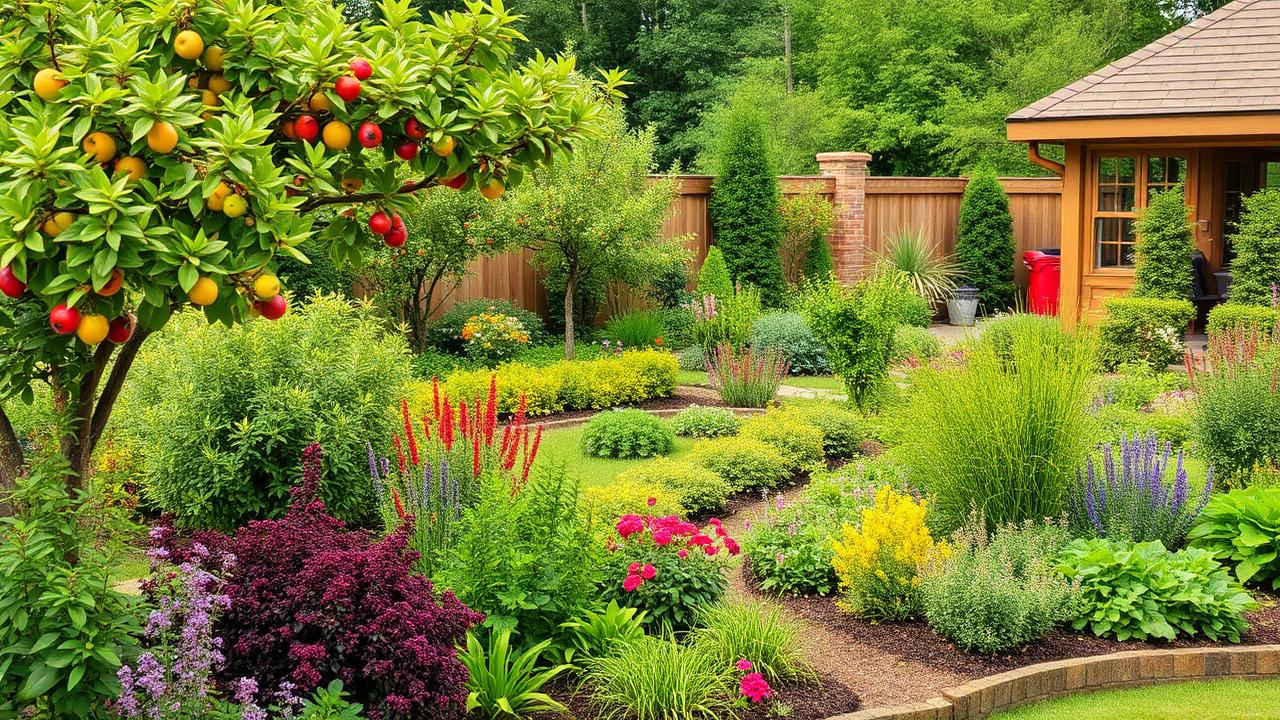
Most home vegetable gardens fail not because the plants struggle, but because the gardeners lose interest. A 20 by 30 foot rectangle of tomatoes and peppers is a chore. By August, half of it is weeds.
Edible landscaping solves this by integrating food plants into the existing landscape design. A blueberry hedge along the property line is no more work than the privet hedge it replaces — but it produces gallons of fruit. A serviceberry tree gives you the same spring blossoms and fall color as an ornamental pear, plus berries in June. Herbs in the front border replace boxwood and add scent and seasoning.
The key shift: choose edible plants because they earn their spot aesthetically, not because you feel obligated to grow your own food.
Edibles That Look as Good as Ornamentals
Fruit Trees
- Serviceberry: white spring blooms, edible June berries, brilliant fall color. Multi-stem form is exquisite.
- Fig: sculptural form, large dramatic leaves, twice-yearly harvest in warm climates.
- Espalier apple or pear: trained flat against a wall or fence. Both functional and architectural.
- Persimmon: upright form, glossy leaves, orange fruit that hangs through winter like ornaments.
- Pomegranate: red flowers, ornamental fruit, drought tolerant.
Berry Shrubs
- Blueberry: white spring blooms, summer berries, brilliant red fall foliage. Better fall color than most ornamentals.
- Currant and gooseberry: shade-tolerant, hedge-friendly, productive.
- Raspberry and blackberry: trained on wires for clean linear forms.
- Aronia (chokeberry): native, super-food berries, white flowers, red fall color.
Edible Perennials
- Asparagus: ferny summer foliage that works as a back-border filler after spring harvest.
- Rhubarb: dramatic large leaves, sculptural in a perennial bed.
- Sorrel and lovage: fit naturally into ornamental herb borders.
- Walking onions and chives: the chive bloom is one of the prettiest spring flowers.
Herb Borders
Lavender, rosemary, thyme, sage, oregano, and tarragon are all both ornamental and useful. A front-yard herb border looks as polished as any boxwood edge — and you can clip a handful while taking out the trash.
Layout Patterns That Work
The Edible Hedge
Replace a property-line hedge of privet, laurel, or arborvitae with blueberries, currants, or hazelnuts. Same screening function, same maintenance level, plus harvest.
The Front-Yard Orchard
Three to five small fruit trees (semi-dwarf apples, cherries, or plums) planted in a clean grid through a lawn or gravel courtyard. Reads as architectural even before they fruit.
The Foundation Edible
Replace foundation shrubs (yew, juniper, boxwood) with blueberries, dwarf figs, or rosemary. The scale is right and the year-round structure works.
The Kitchen Garden as Feature
Rather than hiding raised beds behind the garage, design them as a centerpiece — symmetric layout, gravel paths, central focal point (a sundial, a fig in a pot, a small fountain). This is the classic French potager. Done well, it is the most beautiful part of the yard.
Using AI to Visualize Edible Designs
Edible landscaping is a hard sell to skeptical family members because the mental image is "vegetable patch." AI design tools let you generate the alternative — a designed edible landscape — from your real yard photo. Suddenly the conversation shifts from "do we want a garden" to "do we like this design."
Effective prompts:
- "Front yard with formal blueberry hedge along walkway, lavender border, two espaliered apple trees on south fence"
- "Backyard kitchen garden with four raised beds in symmetric layout, gravel paths, central fig tree in large terra cotta pot"
- "Edible foundation planting, dwarf figs and rosemary replacing boxwood, herb border at front"
- "Small orchard of three multi-stem serviceberry trees in front lawn, naturalistic underplanting of native grasses"
Practical Constraints
- Sun: most fruit needs 6+ hours direct sun. Map your shade before designing.
- Pollination: most apples, pears, and blueberries need a second variety nearby. Plan in pairs or trios.
- Wildlife: deer, birds, and squirrels eat fruit. Netting is realistic; perfect protection is not.
- Harvest timing: fruit ripens whether you are home or not. Choose varieties that match your travel schedule.
What Edible Landscaping Will Not Do
It will not replace a grocery store. A well-designed edible yard might produce 200–500 dollars of food per year — meaningful, but not transformative. The real value is aesthetic, ecological, and experiential: spring blossom, summer harvest, fall color, plus food you grew yourself. Treat the food as a bonus rather than the goal and you will not be disappointed.
Conclusion
Edible landscaping is one of the most underused design strategies in residential yards. The plants are beautiful, the harvests are real, and the maintenance is no worse than the ornamentals you would otherwise plant. AI design tools make it easy to test the look in your specific yard — and to convince anyone in your household who still pictures rows of corn behind the garage.