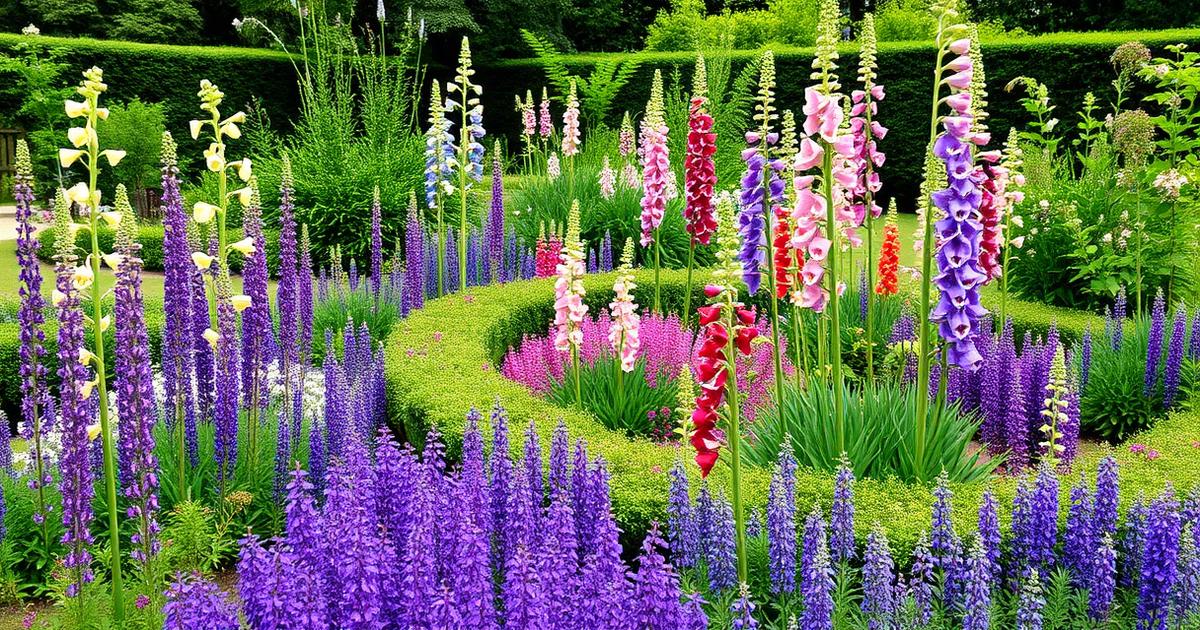
What Defines an English Garden Border?
The English garden border — also called the herbaceous border or mixed border — is considered the pinnacle of garden planting design. Developed and perfected at estates like Great Dixter, Sissinghurst, and Hidcote throughout the 19th and 20th centuries, this planting style combines dozens of species in carefully orchestrated compositions that provide color and interest from spring through autumn.
Unlike formal gardens where plants are used architecturally (clipped hedges, geometric beds), English borders aim for a naturalistic abundance. Plants are grouped in drifts, allowed to intermingle, and arranged so that as one group finishes flowering, the next one begins. The result looks effortless but is actually one of the most knowledge-intensive gardening styles to execute well.
Border Design Fundamentals
Width and Proportion
The single most important dimension of a border is its depth. Too shallow (under 4 feet) and you can't create meaningful layering. The classic English border is 6-10 feet deep, which allows for three distinct layers: tall background plants, medium middle-ground plants, and low foreground plants.
Length should be at least twice the depth for proper visual proportion. So a 6-foot-deep border should be at least 12 feet long. The best English borders run much longer — 30, 50, even 100 feet — creating an immersive experience as you walk alongside them.
The Three-Layer System
Back Layer (4-6+ feet tall): This is the backdrop that everything else is seen against. It can be a wall, hedge (yew or beech are traditional), or tall perennials. Tall plants include delphiniums, hollyhocks, plume poppies, and tall grasses like miscanthus.
Middle Layer (2-4 feet tall): The core of the border where most of the flowering action happens. This layer contains the majority of your perennials: phlox, peonies, campanula, astilbe, helenium, echinacea, and dozens more. Plants are arranged in interlocking drifts of 3-7 individuals of each species.
Front Layer (under 2 feet): Low plants that define the border edge and transition to lawn or path. Hardy geraniums, catmint, alchemilla, low sedums, and dianthus are workhorses here. Front-layer plants should spill slightly over the edge for that characteristic relaxed look.
Drift Planting
English borders use "drifts" — elongated groupings of one species that flow through the border like a river. Rather than planting in circles or squares, drifts create a natural sense of movement. A drift of 5 catmint plants might be 2 plants wide and 3 plants long, oriented diagonally through the border.
The minimum drift size for visual impact is 3 plants of the same species. In larger borders, drifts of 5-9 plants create stronger visual statements. Odd numbers look more natural than even numbers — this principle applies to all naturalistic planting design.
Planning for Seasonal Succession
The hallmark of a great English border is continuous interest from April through October. This requires careful selection of plants that bloom at different times:
Spring (April-May)
Key performers: Tulips (planted among emerging perennials), bleeding hearts, forget-me-nots, brunnera, pulmonaria, aquilegia. Bulbs are essential for spring color because most perennials haven't reached flowering size yet. Plant tulips between peony and phlox positions — their foliage dies back just as the perennials grow up to cover the gap.
Early Summer (June-July)
Key performers: Roses, peonies, delphiniums, foxgloves, campanula, hardy geraniums, iris, alliums. This is the peak English border season — the moment all those Great Dixter and Sissinghurst photographs are taken. Plant heavily for this period, then ensure backup performers are ready for later.
Late Summer (August-September)
Key performers: Phlox, echinacea, rudbeckia, helenium, Japanese anemones, dahlias, sedums, agastache. Many borders sag in August because gardeners over-invest in June bloomers. Intentionally allocate at least 30% of your border to late-summer performers.
Autumn (October-November)
Key performers: Asters, chrysanthemums, ornamental grasses (in full plume), late sedums, autumn crocus, structural seed heads from earlier plants left standing. The autumn border has a different character — more muted, more structural — but equally beautiful.
Color Theory in English Borders
The Gertrude Jekyll Approach
Gertrude Jekyll, the legendary English garden designer, pioneered the idea of color-graded borders. Her approach arranged colors in a gradual progression: cool colors (blues, violets) at the ends, warming through pinks and yellows in the middle, to a hot climax of oranges and reds at the center. This creates a powerful visual journey that draws the eye and creates depth.
The Christopher Lloyd Approach
Christopher Lloyd at Great Dixter took the opposite approach: bold, unexpected color combinations that break conventional rules. Purple next to orange, magenta next to scarlet, lime green next to pink. His borders were electric and controversial — but undeniably exciting. This approach requires confidence and a good eye but rewards with unforgettable gardens.
The Monochrome Approach
The most famous example is Vita Sackville-West's White Garden at Sissinghurst: an entire garden room using only white and cream flowers with silver and green foliage. Monochrome borders (white, blue, pink) create sophisticated elegance and are easier to plan than multi-color schemes because you only need to worry about timing and texture, not color harmony.
Essential English Border Plants
These are the "must-haves" that form the backbone of most English borders:
Roses (David Austin varieties): The repeat-flowering English roses by David Austin combine old-fashioned flower form with modern performance. 'Gertrude Jekyll' (pink), 'Graham Thomas' (yellow), and 'Munstead Wood' (crimson) are border classics.
Delphiniums: Nothing says English garden like a 6-foot spike of blue delphiniums. They require staking but the visual impact is unmatched. Plant in groups of 3-5 for maximum effect.
Peonies: Lush, fragrant, and incredibly long-lived (50+ years in the same spot). They bloom for only 2-3 weeks but their foliage remains attractive all season. Support with grow-through rings to prevent flopping.
Hardy Geraniums: The ultimate border filler. 'Rozanne' blooms from June through frost and weaves beautifully between other plants. Dozens of varieties available for sun or shade, all low-maintenance and reliable.
Catmint (Nepeta): Blue-purple clouds of flowers that bloom for weeks, especially if cut back after the first flush. Perfect for border edges and path-side positions. Drought-tolerant once established.
Alchemilla mollis (Lady's Mantle): Chartreuse flowers and velvety leaves that catch raindrops. Self-seeds freely (which is usually welcome) and works in sun or part shade. Excellent as an edging plant.
How AI Helps Plan English Borders
English border design has traditionally been the domain of experienced gardeners and professional designers because it requires understanding dozens of plant species, their heights, bloom times, colors, textures, and growth habits — then combining them into a composition that works spatially and temporally.
AI design tools democratize this knowledge:
- Upload your garden photo — The AI maps where a border could go, noting sun exposure and background
- Select English garden style — The AI understands the principles of layered border design
- See a planted visualization — View a realistic rendering of an English border in your actual space
- Adjust and iterate — Try different color schemes (pastel, hot, monochrome), different widths, different focal plants
- Get a planting plan — Know which plants to buy, how many, and approximately where to place them
The AI handles the complex planning — seasonal succession, height gradation, color harmony, drift spacing — that would take a human designer hours of research and years of experience to optimize.
Beginner's English Border Formula
For a 10×6-foot starter border against a wall or fence: Back — 3 roses + 3 delphiniums. Middle — 5 peonies + 5 phlox + 3 echinacea. Front — 7 catmint + 5 geraniums + 5 alchemilla. Add 50 tulip bulbs among the perennials for spring color. Total cost: approximately $250-$400 in plants.
Border Maintenance Through the Seasons
Spring: Clear winter debris, apply mulch, set up plant supports (do this early — once plants grow, supports are hard to add). Start dividing and transplanting any overcrowded clumps.
Early Summer: Stake tall plants, deadhead regularly, fill any gaps with annuals (cosmos, nicotiana, zinnias). Water deeply during dry spells.
Late Summer: Continue deadheading for repeat bloomers. Cut back early-season plants that have become untidy. Enjoy the late-season performers.
Autumn: Leave seed heads and dried grasses standing for winter structure and wildlife. Plant spring bulbs among the dormant perennials. Make notes about what worked and what needs moving.
Winter: Cut back all dead material in late winter (February-March) before new growth appears. Top up mulch. Order new plants for any gaps or changes you planned in autumn.
Plan Your English Garden Border
Upload a photo of your garden and see how a classic English border would transform your space. Experiment with color palettes, plant combinations, and border proportions — all visualized on your real garden.
Try AI Garden Design Free →