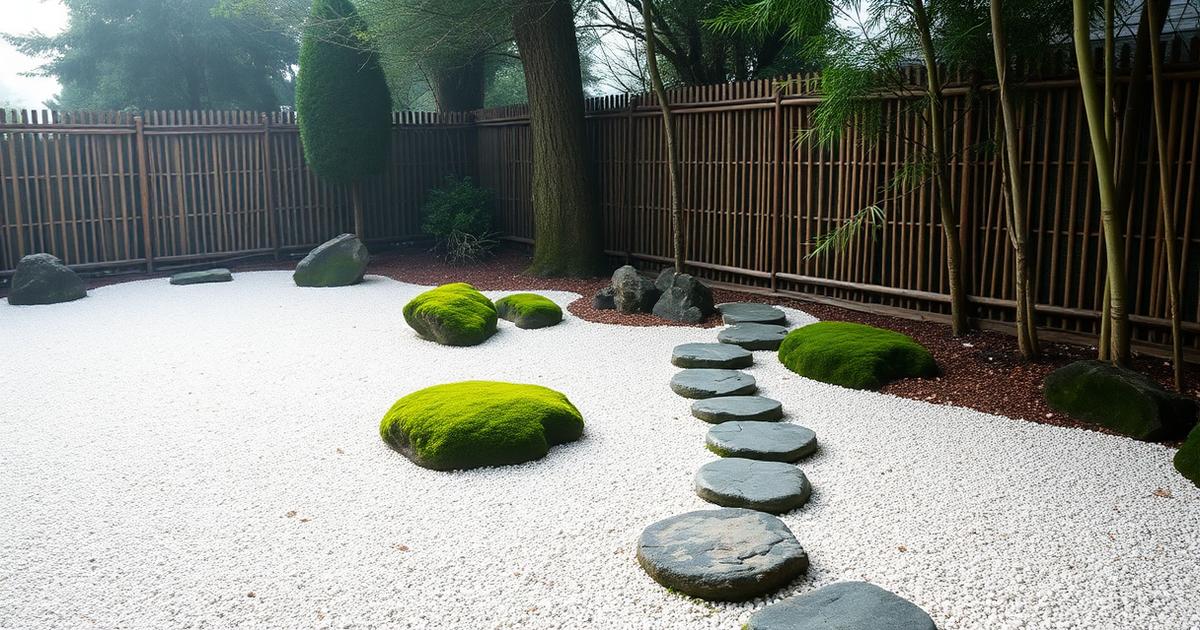
The Philosophy Behind Zen Garden Design
A Japanese Zen garden — or karesansui (dry landscape garden) — is far more than an aesthetic choice. It's a physical expression of philosophical principles: impermanence, simplicity, and the beauty of empty space. Understanding these principles is essential before designing your own, because a Zen garden that misses the philosophy is just a yard with rocks.
The core principles that guide authentic Zen garden design include:
- Kanso (簡素) — Simplicity. Eliminate the unnecessary. Every element must earn its place.
- Fukinsei (不均整) — Asymmetry. Nature is never perfectly symmetrical, and your garden shouldn't be either.
- Koko (枯高) — Austerity. Beauty in restraint and weathered dignity.
- Shizen (自然) — Naturalness. Design should feel unforced, as if nature arranged it.
- Yūgen (幽玄) — Subtle profundity. Suggest more than you show.
When you use AI to generate Zen garden designs, you're giving it visual references that embody these principles. The AI can help you explore different compositions, but understanding the "why" behind each element ensures your final garden feels authentic rather than decorative.
Essential Elements of a Zen Garden
Raked Gravel or Sand (Samon)
The most iconic element of a Zen garden is raked gravel or sand, representing water — rivers, oceans, or the flow of energy. The patterns created by raking are meditative to create and contemplative to observe. Common patterns include concentric circles around stones (representing ripples), straight lines (calm water), and wave patterns (the ocean).
For your own garden, use decomposed granite, pea gravel, or specially sourced white sand. The grain size matters — too fine and it blows away; too coarse and it's difficult to rake clean patterns. Most practitioners recommend 3–5mm grain size for the best balance of stability and rakeability.
Stones and Rocks (Ishi)
Stones are the bones of a Zen garden. They represent mountains, islands, or animals, and their placement follows strict compositional rules. The most common arrangement is odd-numbered groupings — 3, 5, or 7 stones — because odd numbers feel more natural and dynamic than even arrangements.
Moss and Ground Cover
Moss is the living carpet of a Zen garden, softening stone edges and adding subtle green texture. In drier climates where moss struggles, alternatives include Irish moss (Sagina subulata), baby's tears (Soleirolia soleirolii), or Korean velvet grass (Zoysia tenuifolia). The key is choosing low, uniform ground covers that don't compete visually with the stones and gravel.
Water Features (or Their Absence)
Traditional karesansui gardens use no actual water — the raked gravel represents water symbolically. However, many Japanese garden styles do incorporate real water: tsukubai (stone water basins), shishi-odoshi (deer scarers), or simple reflecting pools. If you include water, keep it subtle and purposeful.
Trees and Shrubs
Plant selection in Zen gardens is deliberately restrained. Common choices include Japanese maple (Acer palmatum), black pine (Pinus thunbergii), cloud-pruned boxwood, bamboo (used sparingly as a screen), and flowering cherry for seasonal accent. Every plant should be chosen for its form, texture, and seasonal interest — not just flower color.
Using AI to Design Your Zen Garden
Setting Up Your Photo
For the best AI results with Zen garden design, photograph your space during calm, overcast conditions. The soft light mimics the contemplative atmosphere of traditional gardens. Include any existing elements you want to keep — mature trees, walls, or structures that will frame your garden.
Effective Prompts for Zen Style
When describing your desired Zen garden to AI, use specific terminology:
- "Minimalist Japanese karesansui dry garden with raked white gravel"
- "Asymmetric stone groupings with moss ground cover"
- "Contemplative garden with stone lantern and stepping stones"
- "Wabi-sabi garden with weathered materials and restrained plantings"
Avoid generic terms like "Japanese garden" which may produce results closer to a tea garden or stroll garden — beautiful styles, but different from Zen minimalism.
Evaluating AI Results
When reviewing AI-generated Zen garden designs, check for these authenticity markers:
- Asymmetry — The design should feel balanced but not symmetrical
- Negative space — At least 40-60% of the garden should be "empty" (gravel/sand)
- Odd-numbered groupings — Stones should be in groups of 3, 5, or 7
- Restrained palette — Limited colors: greys, greens, whites, with perhaps one accent
- Clear boundaries — Zen gardens traditionally have defined edges (walls, fences, hedges)
Building Your Zen Garden: Practical Steps
Site Preparation
Choose a flat or gently sloping area with good drainage. Remove all existing vegetation and lay landscape fabric to prevent weed growth through your gravel. Edge the area with timber, stone, or metal edging to contain the gravel — without clean edges, maintenance becomes a constant battle.
Stone Placement
Place your largest stones first. Bury them one-third to one-half deep so they look rooted and natural rather than sitting on the surface. Step back frequently to evaluate the composition from your primary viewing angle — most Zen gardens are designed to be viewed from a specific point, often a seated position.
Gravel Installation
Spread gravel to a depth of 3–4 inches over the landscape fabric. Use a flat rake to level the surface, then switch to a Zen garden rake (kumade) for pattern creation. Start with simple straight lines before attempting more complex patterns.
Planting
Plant in groups, not rows. Use the same odd-number rule as stones. Position plants where they create interesting shadows on the gravel surface — the interplay of shadow and light is a key aesthetic element in Zen design. Prune regularly to maintain clean, architectural forms.
Zen Garden Sizes: From Courtyard to Full Yard
Tabletop Zen Gardens
Start small with a tray garden: a shallow wooden or stone tray filled with fine sand, a few small stones, and a miniature rake. It's a desktop meditation tool and a way to practice composition before committing to a full garden.
Courtyard Gardens (100–300 sq ft)
The ideal size for a residential Zen garden. Small enough to maintain easily, large enough to create meaningful compositions. A courtyard Zen garden typically includes one stone grouping, raked gravel, a moss border, and perhaps a single specimen tree. Budget: $2,000–$5,000 DIY, $5,000–$15,000 professional.
Full Yard Transformation
Converting an entire front or backyard to Zen style is a major project but creates a stunning result. Larger spaces can incorporate pathways, multiple viewing areas, and transitional zones between Zen minimalism and more planted areas. Budget: $10,000–$40,000+ depending on stone quality and size.
Seasonal Considerations
One of the subtle beauties of Zen gardens is how they change with the seasons:
- Spring — Cherry blossoms falling on raked gravel; fresh moss emerging
- Summer — Deep shadows from overhead trees; lush moss at peak green
- Autumn — Maple leaves scattered across gravel; warm color accents
- Winter — Snow-covered stones; stark, beautiful compositions; the garden at its most minimal
When designing with AI, try generating your garden in different seasons to see how it will look year-round. A great Zen garden is beautiful in every season.
Common Mistakes in Zen Garden Design
- Too many elements — The most common mistake. Resist the urge to add "one more thing." Empty space IS the design.
- Symmetrical layouts — Nature isn't symmetrical. Centered, mirror-image designs feel forced.
- Wrong stone types — Avoid bright white or artificially colored stones. Natural, weathered stones in grey, brown, or dark tones are authentic.
- Mixing too many styles — A Buddha statue next to a pagoda lantern next to bamboo creates visual clutter, not Zen simplicity.
- Ignoring the viewing angle — Design from where you'll actually sit and look at the garden.
Visualize Your Zen Garden
Upload a photo of your yard and explore how a minimalist Japanese garden would transform your outdoor space. See different stone arrangements, gravel patterns, and plantings — all generated by AI in minutes.