What Minimalist Landscape Design Actually Means
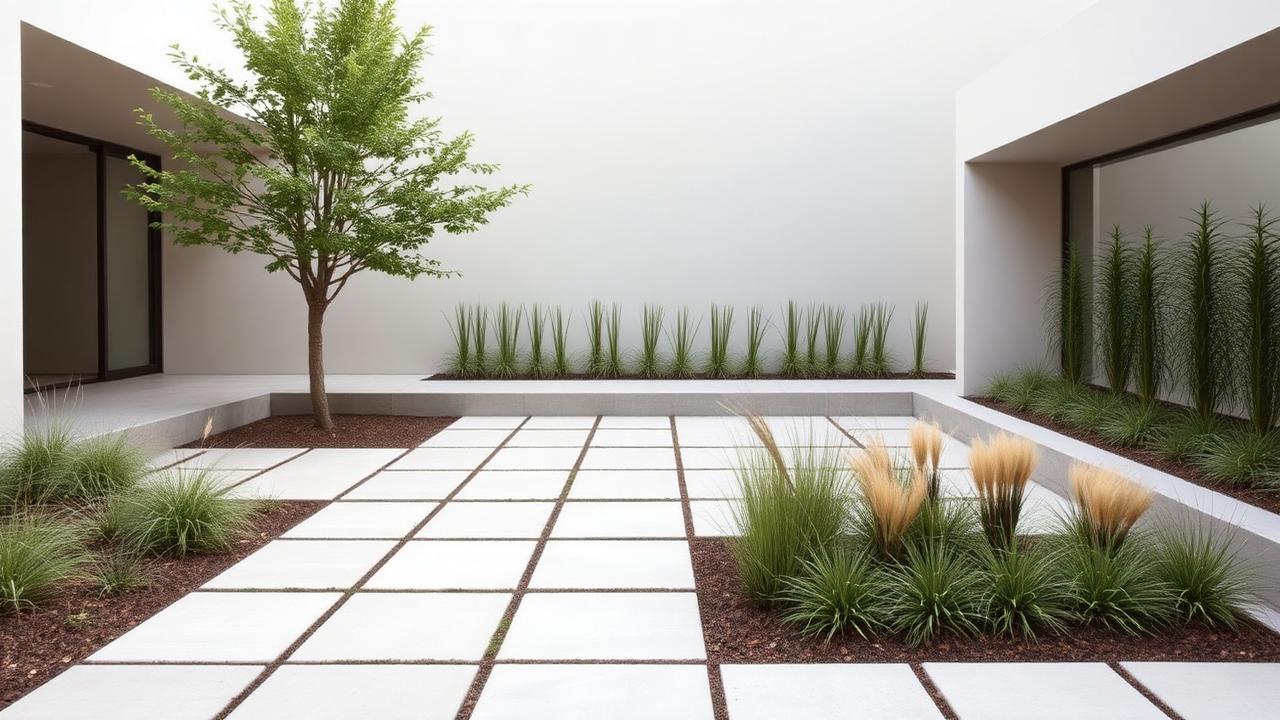
Minimalism is often confused with sparseness. A bare yard with three boxwoods and a gravel strip is not minimalist — it is unfinished. True minimalist landscape design is about restraint, repetition, and proportion. It uses fewer plant species, larger geometric forms, and high-quality materials that age well.
The reference points are Japanese garden design, Mid-Century Modern California yards, and contemporary European architecture. What they share: clean horizontal lines, restrained color palette (mostly green, gray, white, black), and a sense that nothing is decorative for its own sake.
Core Principles
1. Limit Your Plant Palette
A minimalist front yard might use just three to five plant species, repeated in masses. Compare this to a traditional border with twenty species, each represented by one or two plants. The first reads as composition. The second reads as collection.
Strong minimalist plant choices:
- Structural shrubs: boxwood, yew, dwarf pine, hydrangea paniculata
- Architectural specimens: Japanese maple, multi-stem birch, olive tree (warm climates)
- Ornamental grasses: calamagrostis "Karl Foerster", miscanthus, blue oat grass
- Ground cover masses: mondo grass, creeping thyme, sedum
- Single bold perennials: nepeta, salvia, hakonechloa
2. Use Geometry, Not Curves (Mostly)
Minimalist design favors clean rectangles, squares, and straight lines. Pathways are linear. Beds are rectangular. Lawn panels are precise shapes. Curves appear sparingly and only when they serve a function — a circular gravel pad around a specimen tree, for example.
3. Invest in Materials
Because there is less of everything, every material reads loudly. Cheap concrete pavers will look cheap. Large-format porcelain, honed bluestone, board-formed concrete, and Corten steel all read as deliberate. Budget for fewer, better materials rather than more, lesser ones.
4. Embrace Negative Space
Empty space is a design element, not a failure. A large lawn panel, a wide gravel courtyard, or a clean expanse of paving gives the eye somewhere to rest. Without negative space, even good elements feel cluttered.
Common Material Combinations
- Modern Japanese: bluestone or basalt pavers, raked gravel, mondo grass, Japanese maple, black bamboo screening
- California Modern: board-formed concrete walls, decomposed granite paths, olive trees, agave, Mexican feather grass
- Scandinavian: light gray pavers, white birch multi-stems, Hakonechloa grass, weathered timber decking
- Industrial: Corten steel planters, large-format porcelain, ornamental grasses, single Japanese maple
Using AI to Test Minimalist Concepts
Minimalism is unforgiving. The wrong proportion of paving to planting, or the wrong material against your house, becomes obvious instantly. AI design tools let you test these proportions before committing.
Useful prompts:
- "Minimalist front yard, large bluestone pavers, single Japanese maple, mass of mondo grass, no lawn"
- "Modern backyard with rectangular concrete patio, board-formed concrete privacy wall, mass plantings of calamagrostis grasses"
- "Scandinavian minimalist garden, multi-stem birches, gravel courtyard, low Hakonechloa grass beneath, weathered larch fence"
- "California modern yard, decomposed granite, three olive trees in row, agave specimens, no traditional plantings"
Where Minimalism Goes Wrong
- Too sparse: three plants in a sea of gravel reads as abandoned, not minimalist. Mass plantings are essential.
- Wrong scale: small pavers in a minimalist design fight the aesthetic. Go large — 24 inch or 36 inch units, not 12 inch.
- Mixed materials: three different pavers, two fence styles, and a stone wall is not minimalist. Pick one of each and commit.
- Forgotten maintenance: minimalist designs show every weed and every dropped leaf. Plan for higher upkeep visibility, even if total work is lower.
The House Has to Cooperate
Minimalist landscape works best with modern, mid-century, or contemporary architecture. A traditional Colonial or Victorian house with a stark concrete-and-grass yard reads as a mismatch. If your house is traditional, lean toward "refined transitional" rather than full minimalism — the same restraint, but with softer planting.
Conclusion
Minimalist landscape design is not about doing less work — it is about making fewer, better decisions. AI tools help by showing you the consequences of restraint before you build, so you can confidently choose the three plants and one paving material that will define your yard for the next twenty years.