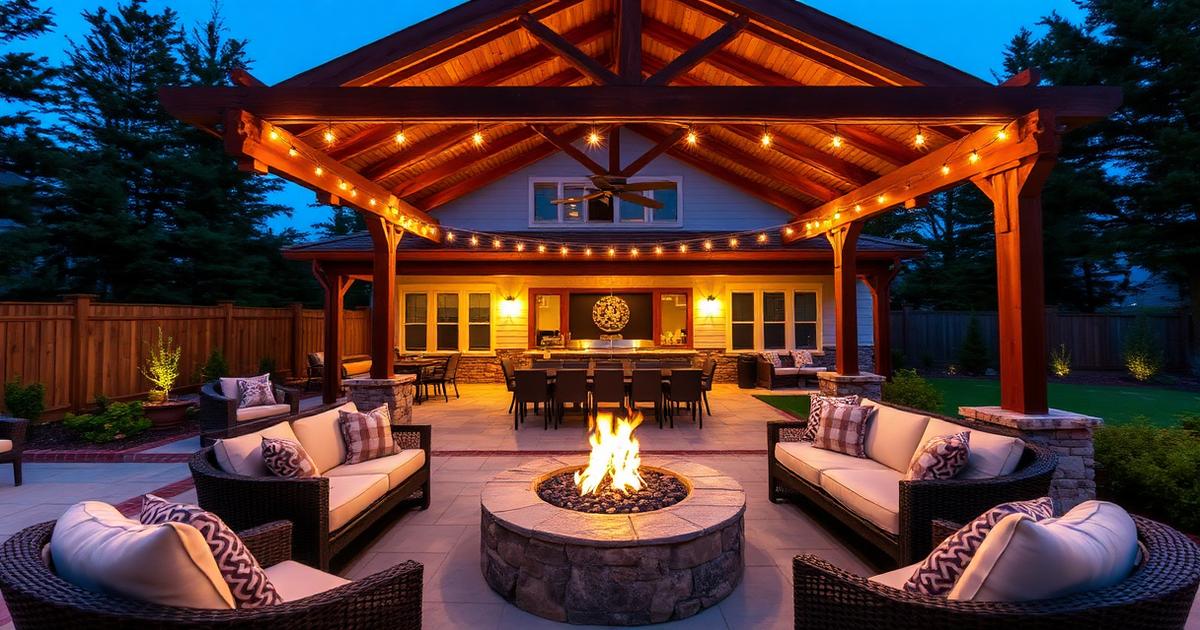
Your outdoor living space is more than just a backyard — it's an extension of your home. Whether you're dreaming of a cozy fire pit area, a full outdoor kitchen, or a peaceful garden retreat, designing the right outdoor living space can dramatically improve how you use and enjoy your property.
Page Contents
What Is an Outdoor Living Space?
An outdoor living space is any area outside your home that's designed for regular use — not just passing through on the way to the garage. It's a space where you eat, relax, entertain, or work. The best outdoor living spaces feel like a natural extension of your indoor rooms, with comfortable seating, defined boundaries, and intentional design.
The concept has evolved significantly over the past decade. What used to be a basic patio with a grill has become fully furnished outdoor rooms with weather-resistant sofas, dining tables, fire features, and even televisions. According to the American Society of Landscape Architects, outdoor living spaces consistently rank as the most requested feature in residential landscape design.
Key insight: The most successful outdoor living spaces solve a specific problem — they give you a reason to go outside. Whether that's morning coffee, evening dinners, or weekend entertaining, design around a primary use case first.
Planning Your Layout
Before choosing furniture or plants, spend time understanding your space. Walk your yard at different times of day. Notice where the sun hits in the morning versus afternoon. Pay attention to wind patterns, noise from neighbors, and natural sight lines from inside your home.
A common mistake is designing the outdoor space in isolation. The best layouts create a seamless flow from indoor to outdoor. Position your main seating area where it's visible from a frequently used room — the kitchen, family room, or bedroom. This visual connection makes you more likely to actually use the space.
Layout Planning Checklist
Sun exposure: Map where sun and shade fall at 10am, 2pm, and 6pm
Wind direction: Note prevailing winds — you may need screening on one side
Access points: Identify how you'll move between indoor and outdoor spaces
Views: Position seating to face the best view and away from less attractive areas
Privacy: Note where neighbors can see into your yard
Utilities: Locate water lines, electrical access, and gas lines for future features
Consider the distance from your kitchen to where you plan to eat outdoors. If it's more than 30 feet, you'll find yourself eating inside more often than not. Proximity matters for everyday use.
Creating Functional Zones
The best outdoor living spaces are divided into distinct zones, each with a clear purpose. This doesn't require a massive yard — even a 20x20 foot patio can support two or three well-defined zones.
Common Outdoor Zones
Dining zone: A table and chairs near the kitchen door. Allow at least 12x14 feet for a table that seats six comfortably, plus room to pull chairs back.
Lounge zone: Comfortable seating for relaxation. A sofa, two armchairs, and a coffee table need roughly 10x12 feet. Position this where you get the best evening light or shade.
Cooking zone: Beyond a basic grill, consider a prep counter, storage, and possibly a sink. Even a simple outdoor kitchen setup needs 6x4 feet minimum.
Fire zone: A fire pit or fireplace creates a natural gathering point. Allow 15 feet diameter for a fire pit with seating around it.
Transition between zones using changes in material, level, or planting. A step down from the dining patio to a gravel lounge area, for example, creates a clear boundary without walls. Border planting between zones adds softness and privacy.
For families with children, consider sightlines carefully. Position the kids' play area where it's visible from the main adult seating area. This lets you supervise without hovering.
Choosing Materials
Your material choices define the character of the space and determine how much maintenance you'll be doing for years to come.
Natural Stone
Flagstone, bluestone, and limestone create a warm, organic feel. They're extremely durable but more expensive — expect $15-30 per square foot installed. Each piece is unique, which gives a handcrafted look. Natural stone works beautifully with cottage, Mediterranean, and traditional styles.
Concrete Pavers
Modern concrete pavers come in dozens of shapes, colors, and textures. They're more affordable ($8-15 per square foot installed) and easier to repair — you can replace individual pavers if one cracks. They suit modern and contemporary styles particularly well.
Composite Decking
Composite materials like Trex or TimberTech offer the warmth of wood without the annual maintenance. They're splinter-free, fade-resistant, and last 25+ years. Cost runs $20-40 per square foot installed, but you save on maintenance over time.
Gravel and Decomposed Granite
The most budget-friendly option at $3-8 per square foot. Gravel is permeable (good for drainage), easy to install, and creates a casual, Mediterranean feel. It works best for secondary areas like pathways and lounge zones rather than dining areas where chairs need to be stable.
Furniture and Decor
Outdoor furniture has improved dramatically in recent years. You no longer have to choose between durability and comfort. High-quality outdoor sofas now rival indoor furniture for comfort while withstanding years of weather exposure.
Invest most of your furniture budget in seating. A comfortable outdoor sofa with weather-resistant cushions costs $1,500-4,000 for a good one, but it transforms how much time you spend outside. Cheap patio chairs don't invite lingering — comfortable seating does.
Pro tip: Buy furniture that's heavy enough not to blow around in wind. Lightweight aluminum chairs might be easy to move, but they'll end up in your neighbor's yard during the first storm. Look for weighted bases or furniture designed to be weather-stable.
Consider shade solutions early in your planning. A pergola with climbing plants provides dappled shade and architectural interest. A retractable awning offers flexibility. Large umbrellas are the most affordable option but need to be secured against wind.
Outdoor Lighting Design
Good lighting extends your outdoor living space into the evening hours — which is often the best time to be outside. Layer your lighting for the most natural, inviting atmosphere.
Lighting Layers
Ambient lighting: String lights, lanterns, or recessed soffit lights provide overall illumination. Warm white (2700K) creates the most inviting atmosphere.
Task lighting: Focused light for cooking and dining areas. Under-counter lights in an outdoor kitchen, or a pendant over the dining table.
Accent lighting: Uplights on trees, path lights along walkways, or underwater lights in a water feature. These create depth and drama.
Fire light: Nothing beats the ambiance of real flames. A fire pit, fireplace, or even candles add warmth both literally and atmospherically.
Use a combination of hardwired and solar lights. Hardwired lights are more reliable for primary areas, while solar path lights work well for secondary zones where consistent brightness isn't critical.
Planting for Atmosphere
Plants soften hard surfaces, provide privacy, create shade, and add color and fragrance. The key is choosing plants that serve a specific function in your outdoor living space, not just filling empty spots.
For privacy screening, fast-growing evergreens like arborvitae, privet, or bamboo (in contained planters to prevent spreading) create green walls within 2-3 years. For fragrance near seating areas, consider jasmine, gardenia, lavender, or rosemary. For shade, a well-placed deciduous tree provides summer cooling while allowing winter sunlight through.
Container planting is particularly effective in outdoor living spaces. Large pots with seasonal plantings can define zone boundaries, add color at eye level, and be rearranged as needed. Use pots that are at least 18 inches in diameter — smaller pots dry out too quickly and look out of scale in outdoor settings.
Budget Considerations
Outdoor living spaces range from a few hundred dollars (basic seating arrangement on existing concrete) to $100,000+ (full outdoor kitchen, pool, and custom hardscaping). Most homeowners spend $5,000-25,000 for a well-designed space.
Budget Breakdown Guide
$1,000-3,000: Quality furniture set, string lights, container plants on existing surface
$5,000-10,000: New paver patio (200-300 sq ft), furniture, basic landscaping, lighting
$10,000-25,000: Larger patio, fire pit, pergola, planting, professional lighting
$25,000-50,000: Outdoor kitchen, multiple zones, premium materials, mature plantings
$50,000+: Full outdoor living suite with pool, spa, kitchen, fireplace, entertainment
The smartest approach is to phase your project. Build the hardscaping (patio, paths, walls) first — it's the most disruptive and sets the foundation. Add furniture and plants in the second phase. Install lighting and accessories in the third phase.
How AI Can Help You Design Your Outdoor Living Space
One of the hardest parts of outdoor design is visualization. It's difficult to imagine how a new patio, pergola, or planting scheme will look in your actual yard. This is where AI landscape design tools become incredibly valuable.
Upload a photo of your current outdoor area to an AI landscape design tool and generate multiple concepts in minutes. You can test a modern minimalist lounge area, a Mediterranean dining courtyard, and a cottage garden retreat — all from the same photo — before committing to any plan.
This visual exploration saves thousands of dollars in potential mistakes. Instead of guessing whether a fire pit will work in the corner or the center of your yard, you can see both options rendered on your actual space. Learn more about how to use AI for landscape design step by step.
Design Your Outdoor Living Space
Upload a photo of your yard and see what's possible. Generate multiple outdoor living concepts in minutes — free to start.