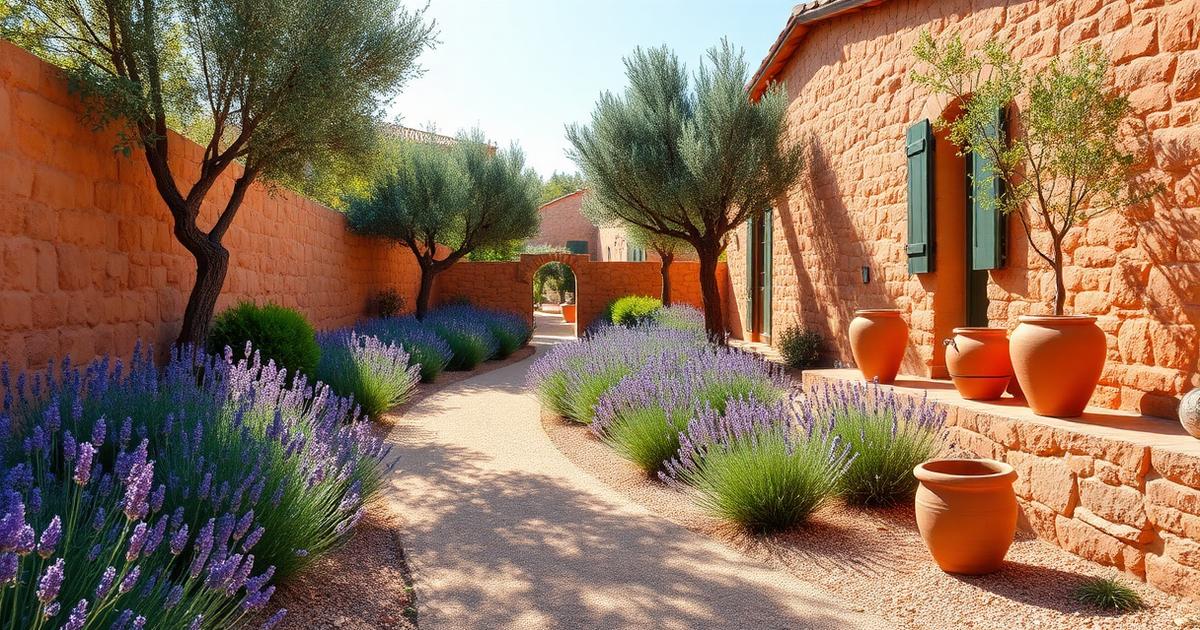
Mediterranean gardens are warm, inviting, and practical. They use drought-tolerant plants, natural stone, and warm colors to create outdoor spaces that feel like a permanent vacation. If you've ever walked through a village in Provence, Tuscany, or coastal Spain and felt that sense of relaxed beauty, that's exactly what Mediterranean garden design captures.
The good news is you don't need to live in Southern Europe to create this look. The core principles of Mediterranean garden design — drought-tolerant planting, gravel mulching, and warm-toned hardscaping — adapt beautifully to most temperate climates across North America, Australia, and beyond.
Page Contents
Key Elements of Mediterranean Garden Design
Mediterranean gardens share several defining characteristics that work together to create their distinctive atmosphere. Understanding these elements helps you adapt the style to your own space rather than just copying photos.
The Five Pillars of Mediterranean Design
Drought tolerance: Plants that thrive on minimal water, reflecting the hot, dry Mediterranean summers. This isn't just aesthetic — it's practical and sustainable.
Warm materials: Terracotta, sandstone, limestone, and warm-toned gravel. These materials absorb and radiate warmth, extending usable hours into cool evenings.
Informal structure: Unlike formal French gardens, Mediterranean spaces feel relaxed. Paths wind rather than march in straight lines. Plants spill over edges.
Indoor-outdoor flow: Patios, courtyards, and terraces blur the line between house and garden. Dining outdoors isn't occasional — it's the default.
Sensory richness: Fragrant herbs, textured foliage, the sound of water, warm colors. Mediterranean gardens engage every sense.
Essential Mediterranean Plants
The plant palette of a Mediterranean garden is surprisingly versatile. While classic choices like olive trees and lavender are iconic, there are dozens of plants that capture the Mediterranean feeling while adapting to different growing conditions.
Signature Trees
Olive trees (Olea europaea): The quintessential Mediterranean tree. Silvery foliage, gnarled trunks, and extreme drought tolerance. Hardy to zone 8. In colder areas, grow in large pots and overwinter indoors.
Italian cypress (Cupressus sempervirens): Tall, narrow columns that create vertical drama. Perfect for framing entrances or lining driveways. Hardy to zone 7.
Citrus (various): Lemon, orange, and kumquat trees in pots bring both beauty and function. Even in cold climates, dwarf citrus can overwinter inside near a sunny window.
Fig (Ficus carica): Large, sculptural leaves and delicious fruit. Surprisingly hardy — some varieties survive zone 6 winters with protection.
Aromatic Herbs and Shrubs
Lavender (Lavandula): Available in dozens of varieties. English lavender (L. angustifolia) is the hardiest; French lavender (L. dentata) has the showiest flowers. Plant in full sun, lean soil, with excellent drainage.
Rosemary (Salvia rosmarinus): Evergreen, fragrant, and virtually indestructible in zones 8+. Use as a low hedge, ground cover (prostrate forms), or specimen shrub.
Sage (Salvia officinalis): Soft grey-green foliage, blue-purple flowers. Multiple ornamental varieties add color — try 'Purpurascens' (purple) or 'Tricolor' (pink/cream/green).
Thyme (Thymus): Excellent between stepping stones, as path edging, or as a lawn substitute. Creeping thyme (T. serpyllum) is the most popular ground cover variety.
Flowering Accents
Bougainvillea: Explosive color in warm climates (zones 9+). Grows on walls, pergolas, and fences. Available in magenta, orange, white, purple, and red.
Agapanthus: Dramatic blue or white flower clusters on tall stems. Excellent in pots or border plantings. Hardy to zone 7 with mulch protection.
Pelargonium (geraniums): Window boxes overflowing with red geraniums are a Mediterranean signature. In cold climates, treat as annuals or overwinter indoors.
Hardscaping and Materials
In Mediterranean design, hardscaping often covers more area than planting. This isn't a green-lawn-dominated landscape — it's stone, gravel, and terracotta with strategic planting in between.
The most important material choice is your gravel or crushed stone for pathways and open areas. Warm-toned options include decomposed granite (golden or tan), pea gravel in buff or honey tones, or crushed limestone. Avoid grey gravel — it reads as cold and industrial rather than warm and Mediterranean.
Material Guide
Terracotta pots: The single most impactful Mediterranean element. Use large, unglazed terracotta pots in varying sizes. Group them in odd numbers. Let moss and mineral deposits form naturally — aged pots look more authentic than new ones.
Natural stone walls: Dry-stacked stone walls for terracing, seating, or bed edging. Local stone is ideal — it ties the garden to the surrounding landscape and costs less to transport.
Gravel paths: 3-4 inches of compacted gravel over landscape fabric. Edge with steel, stone, or brick to prevent spreading. Warm earth tones only.
Iron elements: Wrought iron gates, railings, and garden furniture add authentic detail. Look for rust-finished or naturally weathering pieces.
Water Features
Water is precious in Mediterranean climates, and Mediterranean gardens reflect this with restrained but beautiful water features. You won't find large fountains spraying water into the air — instead, expect gentle spouts, wall-mounted features, and simple basins.
A wall-mounted lion's head fountain with a stone basin below is perhaps the most iconic Mediterranean water feature. The gentle sound of trickling water creates atmosphere while using minimal water (most recirculate). A simple stone or terracotta basin set into a wall, with water flowing from a copper spout, achieves the same effect for much less cost.
If you want a standalone feature, a tiered stone fountain in a courtyard or patio provides a beautiful focal point. Position it where you'll hear it from your main seating area — the sound of water is half the appeal.
Creating Shade
Shade is essential in Mediterranean gardens — the same sun that makes these gardens beautiful also makes them uncomfortably hot without relief. The most authentic shade solutions double as architectural features.
Pergolas are the classic Mediterranean shade structure. A simple wooden or stone pergola covered in grapevine, wisteria, or bougainvillea provides dappled shade that shifts throughout the day. The interplay of light and shadow through a vine-covered pergola is one of the most beautiful effects in garden design.
Canvas sail shades and retractable awnings offer a more modern alternative. Position shade over dining areas and primary seating zones. Secondary areas like gravel gardens and herb beds can remain in full sun — the plants prefer it.
The Mediterranean Color Palette
Mediterranean color palettes are warm and earthy with punctuations of vivid accent color. The base palette includes terracotta, warm stone, olive green, and sandy beige. Accent colors come from flowers and decorative elements — cobalt blue pottery, magenta bougainvillea, deep purple lavender, and ochre yellow walls.
Design rule: Keep your hardscaping and major elements in the warm neutral palette. Let color come from plants and small decorative accents. This prevents the garden from feeling chaotic and ensures it looks good year-round, even when flowers aren't blooming.
Adapting Mediterranean Style to Your Climate
You don't need a Mediterranean climate to create a Mediterranean garden. The key is understanding which principles translate directly and which need adaptation.
In colder climates (zones 5-7), substitute cold-hardy plants with similar aesthetics. Russian sage mimics lavender's color and form but tolerates much colder winters. Juniper provides the evergreen structure of Italian cypress. Hardy herbs like thyme, oregano, and catmint thrive in cold regions with good drainage.
The biggest adaptation needed in wet climates is drainage. Mediterranean plants evolved in fast-draining soils and will rot in waterlogged ground. Raised beds, amended soil with extra sand/gravel, and sloped planting areas solve this problem. Gravel mulch (instead of bark) also improves drainage around plant bases.
Generate Your Mediterranean Garden
Wondering what a Mediterranean makeover would look like in your actual garden? Upload your garden photo to the AI garden design tool, select Mediterranean style, and see what warm stone, olive trees, and lavender borders would look like in your real space.
You can also compare Mediterranean with other styles — try Cottage Garden or Japanese Zen on the same photo to see which resonates most with your home and lifestyle.
See Mediterranean Style in Your Garden
Upload a photo of your garden and generate a Mediterranean design concept in minutes. Free to start.